
The Best Fluffy Pancakes recipe you will fall in love with. Full of tips and tricks to help you make the best pancakes.
Raised Garden Bed Calculator
Calculate exactly how much soil, compost, and materials you need to fill your raised garden beds to avoid extra trips to the garden center.
Bed Dimensions
Material Required
Total Soil Volume
0
cubic yards
Note: For volumes under 1 cubic yard, buying bagged soil is usually more cost-effective than bulk delivery.
Bagged Equivalent (1.5 cu ft bags)
0
bags total
Compost Required (Based on Ratio)
0
cubic yards
Was this tool helpful to you?
Thank you for your feedback!
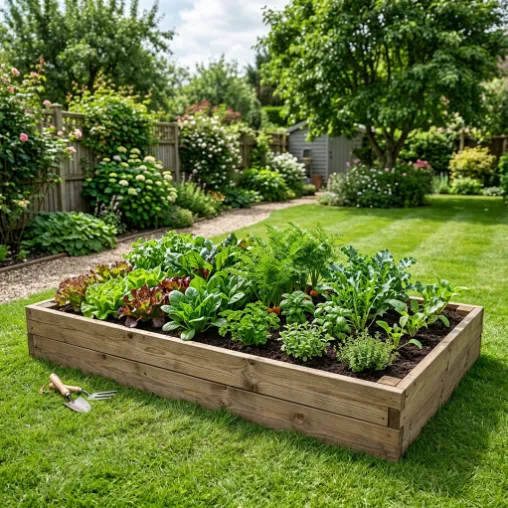
Why Calculate Soil Volume?
Getting the right amount of soil is crucial when starting a new garden. Buying too little means an annoying extra trip to the nursery with a dirty truck, while buying too much leaves you with heavy piles of expensive soil blocking your driveway.
By precisely calculating the cubic yardage required for your specific dimensions, you can easily compare the cost of buying bagged soil from a hardware store versus ordering bulk topsoil delivery from a local landscape supplier. It also ensures you can properly plan your compost and aeration ratios for optimal plant health.
How It Works
Determining your soil needs requires three simple steps.
1
Measure Dimensions
Take the inside length and width of your raised bed in feet. Measuring the inside prevents overestimating due to lumber thickness.
2
Determine Depth
Decide how deep you want your soil (in inches). Leave at least 1-2 inches of space at the top so water doesn't spill over the edges.
3
Buy Materials
Use the output to decide if you need bulk delivery (usually measured in cubic yards) or individual 1.5 cubic foot bags.
Common Raised Bed Materials
A standard garden blend to give your plants the best environment.
| Component | Primary Purpose | Ideal Mix Ratio |
|---|---|---|
| Screened Topsoil | Structural Base & Minerals | 50% - 60% |
| Organic Compost | Nutrients & Biology | 30% - 40% |
| Perlite / Pumice | Aeration & Drainage | 10% - 20% |
| Peat Moss / Coir | Moisture Retention | Optional (10%) |
| Organic Fertilizer | Targeted Feeding | As per package |
Formula Used for Calculation
To find cubic yards, you must first convert all measurements to feet, multiply them together for cubic feet, and then divide by 27.
Length (ft)
×
Width (ft)
×
(Depth (in) ÷ 12)
÷
27
=
Volume (Cu Yards)
Trusted by Homesteaders & Gardeners
See how getting the math right saves time and money for growers everywhere.
"Perfect tool! I was about to buy 40 bags of soil for my new 8x4 beds, but this showed me that ordering two yards in bulk would be much cheaper."
JD
James D.
Backyard Gardener
"The bag equivalent calculator is a lifesaver. I only had a small planter to fill, and knowing exactly how many 1.5 cu ft bags I needed kept my trunk clean."
SL
Sarah L.
Urban Grower
"Converting inches of depth to cubic yards always confused me. This simple layout makes building new raised beds every spring so much easier."
MT
Mark T.
Homesteader
"I love that it breaks down the compost ratio for you. I use a 30% compost mix, and this told me exactly how much mushroom compost to order."
ER
Emily R.
Market Gardener
"Spot on. Filled six massive metal raised beds this weekend and the soil delivery volume calculated here was exactly what we ended up needing."
DK
David K.
Landscaper
"Very handy tool. I used it to calculate the volume for both my vegetable beds and a few odd-shaped flower planters around the patio."
TW
Tom W.
Homeowner
"I always under-buy soil because I forget about compaction. Knowing the base volume allowed me to accurately add a 10% buffer for settling."
AJ
Amanda J.
Community Garden Manager
"Helped me figure out how much Hügelkultur filler to use. By calculating the total volume, I knew exactly how much space to take up with old logs."
BP
Brian P.
Permaculture Designer
"Fast, clean, and accurate. The interface works beautifully on my phone while I'm standing right there in the aisles of the garden center."
CN
Chloe N.
Patio Gardener

Frequently Asked Questions
A cubic foot is a block measuring 1 foot on all sides. A cubic yard is a block measuring 3 feet on all sides. Since 3x3x3 = 27, there are 27 cubic feet in a single cubic yard. Bagged soil is sold in cubic feet, while bulk deliveries are sold in cubic yards.
Yes! Freshly poured soil is highly aerated. After a few waterings, it will compress and settle. It is standard practice to buy about 10% more soil than your calculation to ensure your beds remain full after settling.
A popular DIY blend is "Mel's Mix," consisting of 1/3 compost (mixed varieties), 1/3 peat moss or coco coir for moisture, and 1/3 coarse vermiculite or perlite for drainage. For deeper beds, a mix of 60% quality topsoil and 40% compost is excellent and more affordable.
No. If your beds are very deep (over 18 inches), you can use the "Hügelkultur" method. Fill the bottom half with decaying logs, branches, leaves, and organic yard waste, then top it with 8-10 inches of high-quality garden soil. This saves money and creates a rich environment over time.
No, this is a common gardening myth. Adding gravel at the bottom of a bed actually creates a "perched water table," which causes the soil right above the rocks to stay overly saturated and leads to root rot. Use a consistent, well-draining soil mix from top to bottom.
Generally, if your calculation shows you need more than 1 cubic yard (about 18 large bags), bulk delivery from a local landscape supply company will be significantly cheaper than buying individual bags at a big box store, even factoring in the delivery fee.
Related Management Tools
Explore our other calculators for homesteaders and farmers.
Fertilizer Blend Calculator
Calculate the exact NPK ratios and blend percentages for your specific soil and crop needs.
Seed Rate Calculator
Determine the optimal planting density and exact amount of seed required for your acreage.
Water Storage Calculator
Calculate rainwater catchment potential and size your storage tanks for dry seasons.
Need a Custom Calculator?
Don't see the specific environmental or homesteading management tool you need? We can build it tailored to your exact requirements.
Contact Us