
The Best Fluffy Pancakes recipe you will fall in love with. Full of tips and tricks to help you make the best pancakes.
Fertilizer Blend Calculator
Prevent lawn burn and avoid underfeeding. Calculate exactly how many pounds of product and total bags you need based on your target Nitrogen rate and fertilizer analysis.
Enter Lawn & Bag Specs
Application Needs
Total Product Needed
15.6
lbs
Bags Required
0.8
bags
Spreader Setting Target (Product Rate)
3.1
lbs / 1000 sq ft
Was this tool helpful to you?
Thank you for your feedback!
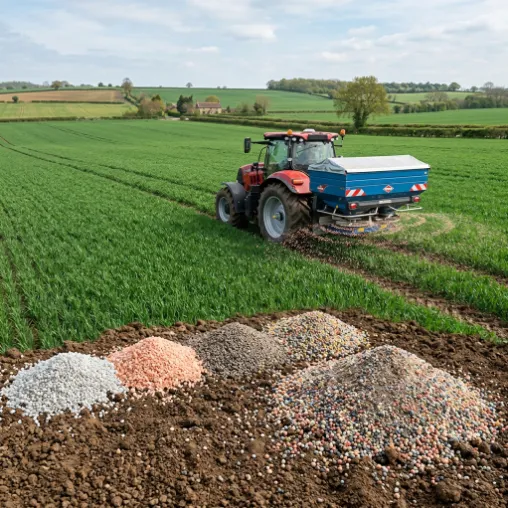
Why Calculate Fertilizer Math?
Lawn burn and runoff are the two biggest risks of guessing your fertilizer application. If you apply too much nitrogen, the salts will dehydrate and scorch your grass. If you apply too little, your lawn won't receive the nutrients it needs to build a deep root system.
By calculating your blend beforehand, you translate the "Target Nitrogen" (usually between 0.5 to 1.0 lbs per 1,000 sq ft) into the exact pounds of physical product you need to put into your spreader hopper. This saves you money, protects the environment, and guarantees a lush, dark green yard.
How Our Calculator Works
We take the guesswork out of the N-P-K ratio. Just follow these three steps for a perfect application.
1
Measure Lawn Size
Determine your total square footage (subtracting house footprint, driveways, and large garden beds).
2
Check the Bag
Look at the N-P-K numbers on your fertilizer bag. The first number is the Nitrogen percentage (e.g., 24 in a 24-0-4 blend).
3
Calculate Product
Our tool calculates exactly how many pounds of the physical product you need to put into your spreader hopper.
Common Fertilizer Blends
Use this quick reference to understand the typical N-P-K ratios used in lawn care programs.
| Blend Type | Typical N-P-K Ratio | Best Used For |
|---|---|---|
| Starter Fertilizer | 24-25-4 | Seeding, overseeding, or laying new sod. High phosphorus (P) for roots. |
| Spring/Maintenance | 30-0-4 | Routine feeding for established lawns. High nitrogen (N) for green growth. |
| Winterizer | 10-0-20 | Late fall application. High potassium (K) for winter stress tolerance. |
| Organic Milorganite | 6-4-0 | Slow-release summer feeding. Safe, won't burn, adds iron for deep green. |
Formula Used for Calculation
This calculator converts your target Nitrogen rate into the actual physical weight of the fertilizer product you need to spread.
(Target N
× Lawn Multiplier)
× Lawn Multiplier)
÷
(Bag N % / 100)
=
Total Lbs of Product
Trusted by Homeowners & Turf Pros
See how this tool helps prevent lawn burn and save on product costs.
"I used to just guess and empty the whole bag. This showed me I was over-applying by almost double. My lawn is greener now and I'm saving money."
DR
David R.
DIY Homeowner
"Super easy to use. Knowing the 'Product Rate' output helped me dial in my Scott's spreader settings perfectly before my fall nitrogen blitz."
SM
Sarah Mitchell
Lawn Enthusiast
"We run a landscaping crew and use this daily to calculate bag requirements for different client yard sizes. It handles high-nitrogen urea math instantly."
JT
James Tyler
Landscaping Business Owner
Frequently Asked Questions
N-P-K stands for Nitrogen, Phosphorus, and Potassium. The numbers represent the percentage by weight of each nutrient in the bag. For example, a 50lb bag of 20-5-10 contains 20% Nitrogen (10 lbs of actual N).
Nitrogen is the macronutrient grass uses the most for top growth and green color. It's also the nutrient most likely to burn your lawn if over-applied. Therefore, standard lawn care programs base all application rates around target Nitrogen levels.
A general safe rule of thumb is to apply 0.5 to 1.0 pounds of Nitrogen per 1,000 square feet per application. If using a fast-release synthetic fertilizer, stick closer to 0.5 lbs to avoid burning the grass during hot weather.
It is usually best to apply granular fertilizer to a dry lawn. If the grass is wet, the fertilizer granules can stick to the blades and cause severe chemical burns. Apply when dry, then water it in immediately afterward.
Related Landscaping Tools
Enhance your property management with these calculators.
Seed Rate Calculator
Calculate exact pounds of seed needed for new lawns or overseeding existing turf.
Water Storage Calculator
Accurately predict water storage requirements and capacities for agricultural needs.
Mulch Cost Calculator
Accurately predict how many bags or cubic yards of mulch you need for garden beds.
Need a Custom Calculator?
Don't see the specific landscaping or lawn care tool you need? We can build it tailored to your exact requirements.
Contact Us