
The Best Fluffy Pancakes recipe you will fall in love with. Full of tips and tricks to help you make the best pancakes.
Growing Degree Days Calculator
Track cumulative thermal heat units (GDD) to predict crop growth stages, pest emergence, and harvest timing. Optimize irrigation, chemical passes, and field operations with accurate physiological modeling.
Thermal & Crop Inputs
Thermal Unit Summary
Total Accumulated GDD
23.0
GDD
Heat units gained over the specified 1-day period.
Daily Accumulation Rate
23.0
GDD / Day
Expected daily physiological growth progression.
Effective Mean Temp
73.0
°F
Adjusted average
Growth Status
Active
Above base threshold
Was this tool helpful to you?
Thank you for your feedback!
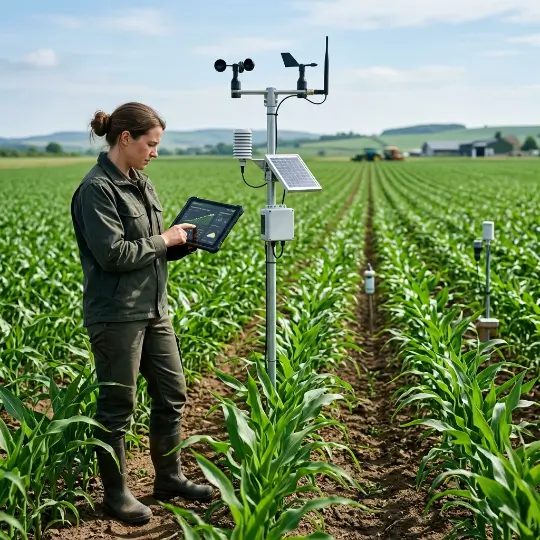
Why Tracking Growing Degree Days Matters
Crops and insects do not develop on calendar days—they develop on accumulated heat. Calendar-based planting schedules can lead to inaccurate maturity forecasts because an unusually warm spring accelerates physiological growth, while an overcast, cold month delays emergence.
By calculating Growing Degree Days (GDD) or heat units, growers, crop consultants, and agronomists can predict emergence dates, time post-emergence herbicide applications before weed canopies close, anticipate critical pollination windows (tasseling and silking in corn), and track insect pest lifecycle thresholds with high scientific precision.
How the growing degree day calculator works
Calculate daily and cumulative heat units in three straightforward steps.
1
Record Temperatures
Enter your local weather station's daily maximum and minimum temperatures recorded across the field.
2
Select Crop Base
Choose a crop preset (e.g., 50°F for corn/soybeans, 40°F for wheat) or customize your biological baseline.
3
Track Phenology
Instantly obtain cumulative heat units to compare against variety hybrid ratings and insect degree-day models.
Benchmark GDD Requirements for Major Field Crops
Standard thermal unit thresholds from planting through physiological maturity across commercial crops.
| Crop Commodity | Base Temp (Tbase) | Accumulated GDD to Maturity |
|---|---|---|
| Corn / Maize (Field Grain) | 50°F (10°C) | 2,100 – 2,800 GDD (90–120 GDD for emergence, ~1,300 for silking). |
| Soybeans | 50°F (10°C) | 2,000 – 2,500 GDD (Depending on relative maturity group 00 through V). |
| Winter & Spring Wheat | 40°F (4.4°C) | 1,600 – 2,200 GDD (140 GDD for seedling emergence; Feekes 10.5 heading). |
| Cotton (Upland) | 60°F (15.6°C) | 2,200 – 2,600 DD60 (Accumulated DD-60 units required to open bolls). |
| Alfalfa / Perennial Forage | 41°F (5°C) | 700 – 800 GDD per cutting cycle for optimal relative feed value (RFV). |
How to use the growing degree days calculator
Using this calculator is simple and takes just a few seconds. First, choose your crop preset from the dropdown menu to instantly set standard agronomic base and cutoff temperatures, or select Custom Crop Parameters if you are tracking a specialized variety or insect threshold.
Next, input your recorded daily maximum and minimum temperatures from your field weather station or nearest meteorological feed. Specify the number of days you want to evaluate—use 1 for single-day tracking, or enter multiple days to project heat unit accumulation during extended warm or cool weather patterns.
Finally, click Calculate Growing Degree Days. Your real-time thermal summary will immediately display the total accumulated GDD, daily heat unit accumulation rate, effective mean temperature, and current crop physiological growth status.
Formula Used in Growing Degree Days
Daily average effective temperature is calculated by taking the midpoint between daily maximum and minimum temperatures, then subtracting the crop base threshold. For corn (86/50 method), temperatures are clamped to prevent biological heat stress distortion.
Mean Daily Temp
([Tmax + Tmin] / 2)
([Tmax + Tmin] / 2)
−
Base Threshold
(Tbase)
(Tbase)
=
Daily GDD
Trusted by Commercial Farmers & Agronomists
Helping crop scouts and growers predict growth stages and protect yields across North America.
"The 86/50 modified cutoff calculation is spot on for our corn fields. It helped us time our late-season fungicide flyover right at the VT/R1 tassel stage."
DK
Darren Krause
"We manage 3,200 acres of small grains. Tracking GDD in spring let us predict jointing and boot stage a full week before visual scouting confirmed it."
BH
Brian Hensley
"Extremely handy to switch between corn base 50 and cotton DD-60. Fast, lightweight, and works seamlessly directly on my tablet in the field."
WP
Wayne Peterson
"We monitor corn borer and alfalfa weevil hatch cycles using GDD accumulators. Having exact control over custom base temperatures makes this tool invaluable."
CM
Claire McCauley
"I use this tool in agronomy extension meetings to show growers why calendar days fail to predict silage harvest windows during unusually cool autumns."
RL
Roger Lawson
"Clean design, intuitive presets, and reliable math. Perfect benchmark tool for calculating how much grain drying time we will need before harvest."
GS
Glenn Stewart
Frequently Asked Questions
Standard GDD simply subtracts the base temperature from the mean daily temperature. The modified 86/50 method (widely used for corn) imposes an upper temperature cap of 86°F (30°C) and a lower cap of 50°F (10°C). When temperatures exceed 86°F, corn growth slows due to heat and moisture stress rather than accelerating, so capping Tmax prevents overestimating development.
Base temperature represents the physiological minimum temperature at which cellular plant activity and enzymatic processes occur. Warm-season crops like corn, soybeans, and sorghum have a base threshold of 50°F (10°C). Cool-season crops such as wheat, oats, and barley remain physiologically active down to 40°F (4.4°C), while cotton requires 60°F (15.6°C).
No. If the average daily temperature falls below the biological base threshold, zero GDD is recorded for that day. Negative heat units do not accumulate because cold temperatures suspend plant development rather than reversing biological cell division.
Like crops, ectothermic insect pests develop based on heat units. For example, European corn borer moths emerge around 450 GDD, while alfalfa weevil larvae become active around 300 GDD (base 48°F). Agronomists track degree-day accumulations from biofix dates to time insecticide sprays when pests are at their most vulnerable instar stages.
For annual field crops (corn, soybeans, cotton), accumulation begins on the planting date. For winter wheat and perennial forages like alfalfa, accumulation typically starts on January 1st or the date spring green-up begins after breaking winter dormancy.
Related Agronomy Tools
Optimize your field applications and farm economics.
Fertilizer Blend Calculator
Calculate exact pounds and percentages of Nitrogen, Phosphorus, and Potassium in custom mixes.
Mulch Cost Calculator
Estimate required mulch volume in cubic yards or bags and calculate your total project cost.
Crop Profit Calculator
Project agricultural crop revenue, variable input costs, and net farm operating margins.
Need a Custom Calculator?
Don't see the specific agronomy or landscaping tool you need? We can build it tailored to your exact requirements.
Contact Us