
The Best Fluffy Pancakes recipe you will fall in love with. Full of tips and tricks to help you make the best pancakes.
What Is Soil Erosion? Simple Meaning, Causes, and Examples

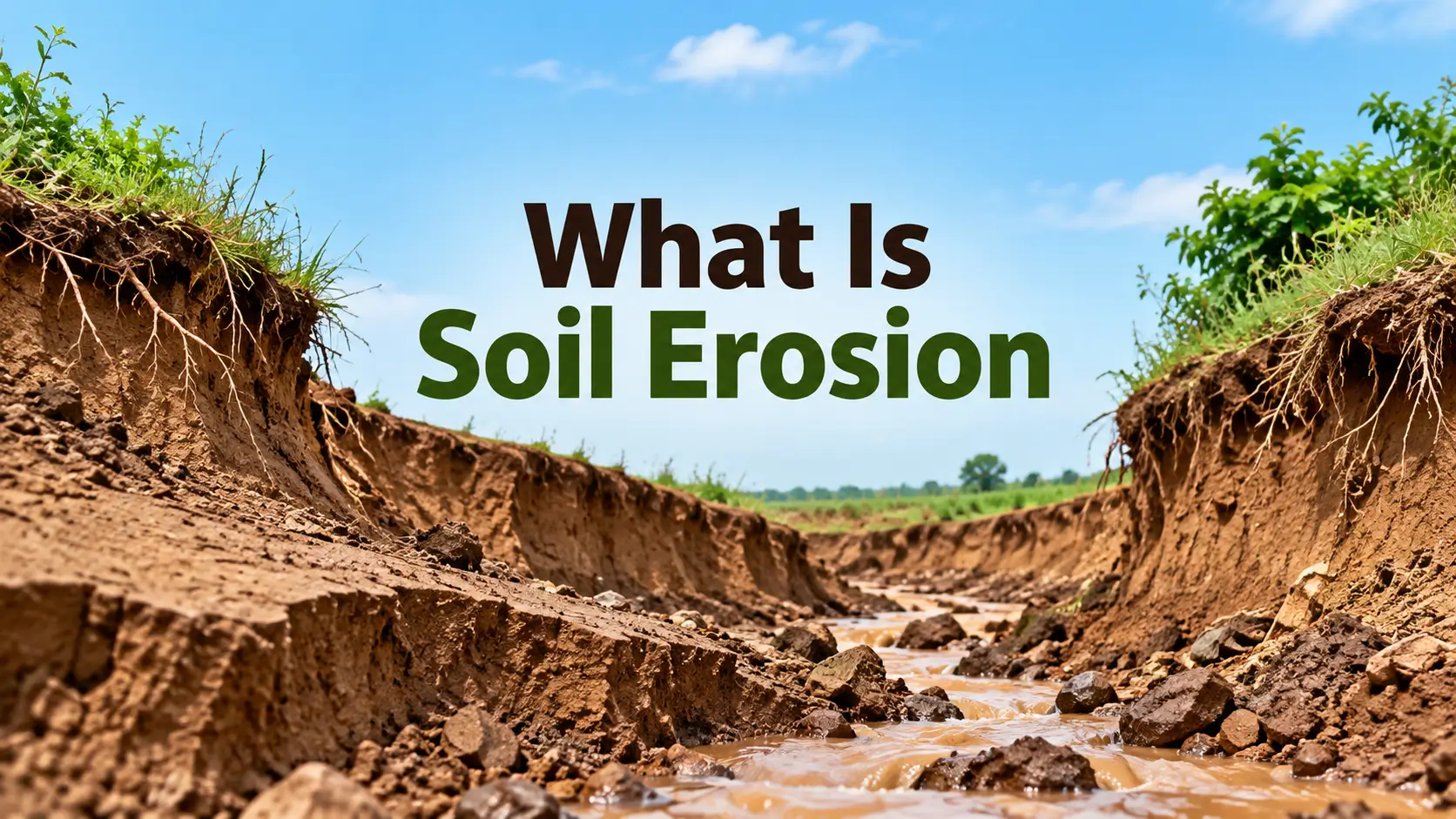
Look closely at any farm, hillside, or riverbank and you will notice something happening slowly over time. The top layer of soil, the part packed with nutrients that plants depend on, is gradually being worn away by wind, water, and human activity. This process is called soil erosion, and it is one of the biggest hidden threats to farming, land health, and food production around the world.
In this post, we will cover what soil erosion actually means, what soil erosion is caused by, the different types you should know about, and simple ways to prevent it from damaging your land.
What Is Soil Erosion in Simple Terms
Soil erosion is the process of topsoil being worn away and carried off by natural forces like wind and water, or by human activity such as farming, construction, and deforestation. The topsoil is the most fertile layer of the ground, so once it is lost, the land underneath becomes far less productive for growing crops or supporting plant life.
What Is Soil Erosion Caused By
Understanding what soil erosion is caused by helps you spot the warning signs before serious damage happens on your own land.
Water Erosion
Heavy rainfall and fast moving water are among the most common causes of soil erosion. When rain falls faster than the ground can absorb it, water runs across the surface, picking up loose soil particles and carrying them away into streams, rivers, and low lying areas.
Wind Erosion
In dry, open areas with little plant cover, strong winds can lift and carry away loose topsoil, especially during droughts or after fields have been cleared. This type of erosion is a major concern in flat, arid regions with sandy or loose soil.
Poor Farming Practices
Farming methods like excessive tillage, leaving fields bare between growing seasons, and planting the same crop repeatedly without rotation can weaken soil structure and make it far more vulnerable to erosion from wind and water.
Deforestation and Land Clearing
Trees and plants hold soil in place with their root systems. When land is cleared for farming, construction, or logging, the soil loses this natural anchor and becomes much more likely to wash or blow away.
Overgrazing
Livestock grazing too heavily in one area strips away plant cover and compacts the soil, leaving the ground bare and exposed to the same forces that cause wind and water erosion.
Construction and Land Development
Construction sites often remove vegetation and disturb large areas of soil, leaving it loose and unprotected until new grass or plants are established, which creates a window of time where erosion risk is especially high.
What Is Soil Erosion and Its Types
Soil erosion does not happen the same way in every location. Knowing what is soil erosion and its types helps explain why different areas face different challenges.
Sheet Erosion
Sheet erosion happens when a thin, even layer of topsoil is washed away across a wide area during rainfall, often going unnoticed at first since the loss happens gradually and evenly.
Rill Erosion
When water begins to concentrate into small channels as it flows across a slope, it creates narrow grooves in the soil known as rills. This is often one of the first visible signs that erosion is becoming a more serious problem.
Gully Erosion
If rill erosion is left unaddressed, those small channels can deepen and widen into large gullies, sometimes several feet deep, making the land difficult or even impossible to farm in that area.
Wind Erosion
As mentioned earlier, wind erosion lifts loose soil particles from the surface and carries them elsewhere, often stripping fields of their most fertile top layer during dry, windy conditions.
Coastal and Streambank Erosion
Rivers, streams, and coastlines naturally erode over time as moving water wears away the banks and shoreline. Human activity near these areas, such as removing vegetation or building too close to the water, often speeds up this natural process.
Real World Examples of Soil Erosion
The Dust Bowl of the 1930s remains one of the most well known examples of severe wind erosion, where poor farming practices combined with drought stripped away massive amounts of topsoil across the American plains. Riverbanks that slowly widen and change shape over decades are a common example of streambank erosion caused by the constant flow of water. Bare hillsides that develop deep grooves and gullies after repeated heavy rain show a clear progression from rill erosion into more serious gully erosion.
What Is Soil Erosion and How Can It Be Prevented
Once you understand what soil erosion is and how it forms, preventing it becomes a matter of protecting and strengthening the soil against the forces that cause it.
Way to Prevent Soil Erosion
- Plant cover crops during the off season to protect bare soil and hold particles in place
- Use crop rotation to maintain healthy soil structure across seasons
- Practice reduced tillage to preserve natural soil structure
- Build terraces on sloped land to slow down water flow
- Plant windbreaks along fields to reduce wind speed and protect exposed soil
- Maintain ground cover with grass, mulch, or crop residue between plantings
- Manage grazing carefully by rotating livestock and avoiding overgrazing
- Control water runoff with grassed waterways, contour farming, and proper drainage
Final Thoughts
Soil erosion is a slow, often invisible process, but its effects on farmland and land health can be serious over time. Knowing what soil erosion is caused by, recognizing its different types, and applying simple prevention methods gives you the tools to protect your land for years to come. Small, consistent efforts like cover cropping, reduced tillage, and proper ground cover can make a real difference in keeping your soil where it belongs, right beneath your feet and ready to support healthy growth season after season.